
📄 A flawless article. A clean bibliography. And yet, citations that exist nowhere.
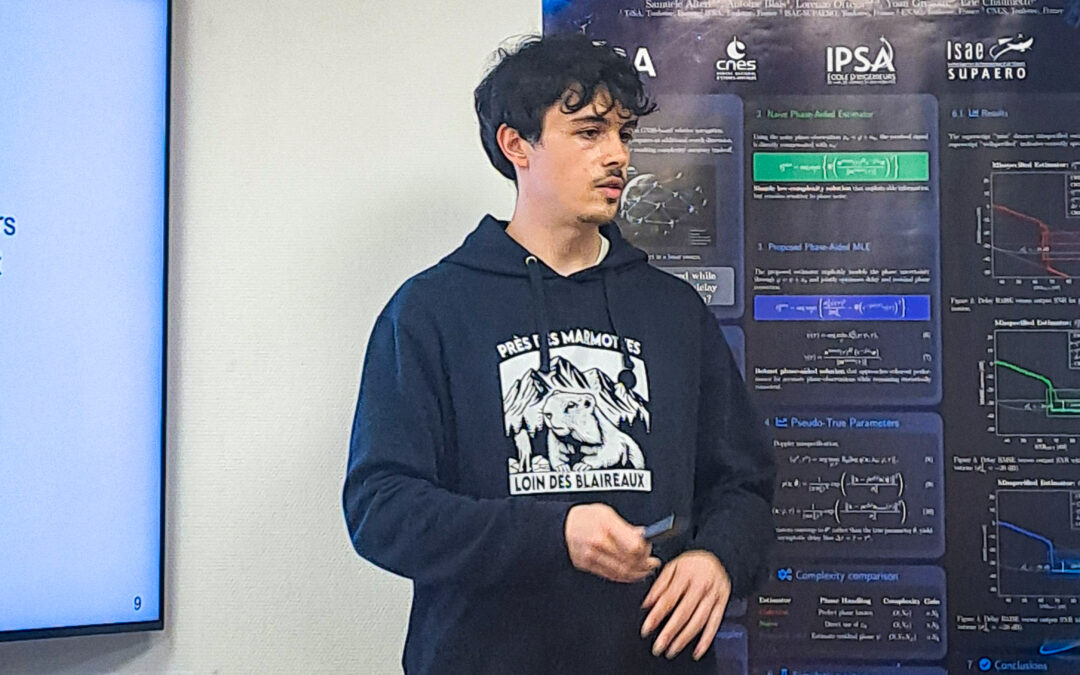
This is the principle of “hidden references,” one of the frauds presented on Tuesday, November 17, at TéSA by Jules Di Scala, during the seminar “How to recognize various breaches of research integrity?”.
The mechanism is subtle. After publication, each article is described by metadata transmitted to bibliographic databases. These are used to index publications, their authors, and the links between them. Some unscrupulous publishers slip in references that are absent from the text. The indicators of the researchers concerned then rise mechanically and lose their value.
📚 The seminar’s agenda:
• the research process, the massification of scientific production, and open science
• an overview of bad practices in scientific publishing
• automatic detection methods, based on the analysis of massive databases
Jules is a third-year PhD student at IRIT (Toulouse Institute of Computer Science Research), in the IRIS team (Information Retrieval and Synthesis). Together with his thesis supervisors, he is developing these methods, particularly for citation manipulation and conflicts of interest.
🛠️ Tools already exist to verify a publication: PubPeer, a collaborative platform where the scientific community reports flaws in articles, and Problematic Paper Screener, which aggregates indicators to assess its reliability.
Thank you to Jules for this overview, which is precious for our PhD students!
Are you interested in our research work 🔬?
Find us at https://www.tesa.prd.fr 🛰️, we would be delighted to exchange with you!
#TeSA
#PhD
#Research