
🛰️ Automatically detect satellite clock drifts before they affect measurements.
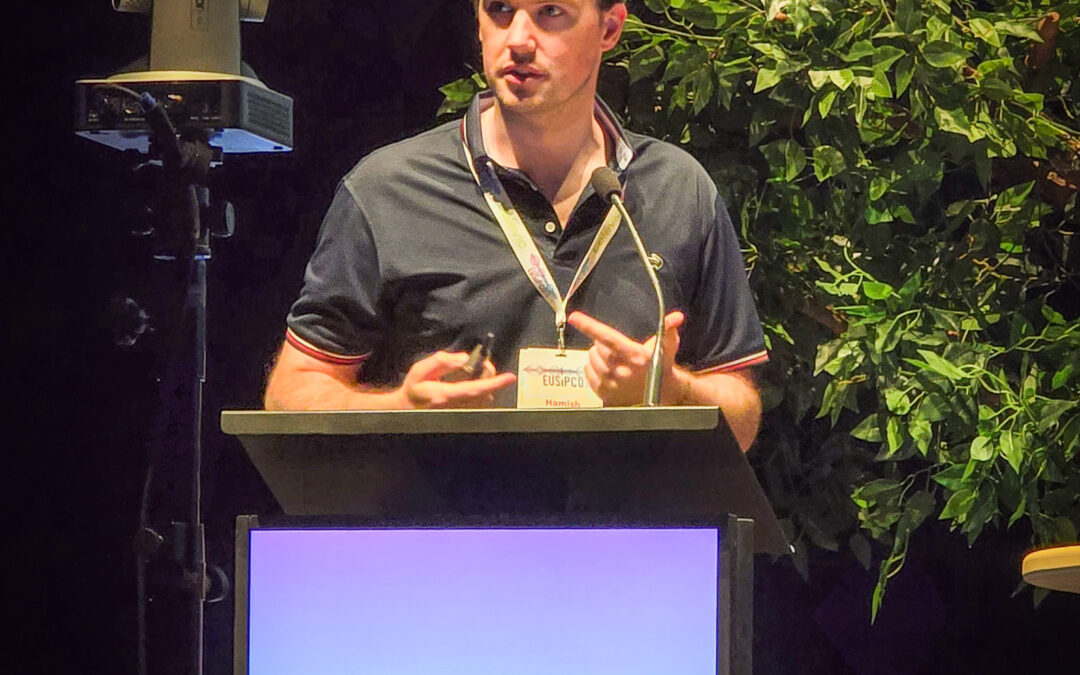
@Hamish McPhee, a teaching researcher at the Institut Polytechnique des Sciences Avancées (IPSA) and a TéSA affiliated researcher, presented a new change detection method at the European Signal Processing Conference (EUSIPCO) 2026: “Changepoint Detection Using the Complete Likelihood Ratio Test: Application to Satellite Clock Anomalies” 📡.
The behavior of onboard clocks ⏰ can evolve under the influence of environmental factors, with a direct impact on the reliability of satellite measurements. The proposed method, based on a likelihood ratio robust to outliers, enables a more systematic detection of these changes — a key issue for the reliability of space systems 🚀.
This work, conducted with @Jean-Yves Tourneret (ENSEEIHT) and co-funded by Thales Alenia Space, illustrates TéSA’s ability to address the operational issues of its industrial partners. It also continues the support from CNES, which has been accompanying TéSA for several years on nanosatellite swarms through PhDs and R&D studies.
Did you know that a clock offset of one microsecond corresponds to a position error of 300 km 😱 ?
A little nod from the session: even experts in clock anomalies ⏰ can be surprised by time 🤭 ! @Hamish McPhee sped up his presentation at the end, thinking he only had one minute left, when he actually had six. Those minutes were greatly put to use for rich exchanges with the audience.
Are you interested in our research work 🔬 ?
Find us at https://www.tesa.prd.fr 🛰️, we would be delighted to exchange with you !
#TeSA
#Research
#SignalProcessing